Pros:
- salary is high, The average salary is approximately $85,000 per year, with potential for overtime pay.
- Strong demand and growth, More people join this job to work harder And spend more time making more products and advanceing it production
- Hands on work and variaty, Engineers often split time between an office and the factory floor, ensuring diverse daily tasks that combine technical skill with problem-solving.
- career flexibilty, Multiple specializations exist, ranging from automation and robotics to process optimization.
Cons:
- high stress environment, Manufacturing environments are fast-paced, where downtime is costly, making it high-pressure
- Long and Unpredictable Hours, The job can require overtime, weekends, or shifts to support production schedules.
- Physical Working Conditions, Time spent on factory floors can involve loud, hot, or physically demanding environments.
- High Technical Requirements, The job requires deep knowledge of mechanical, electrical, and industrial systems, with little room for error.
History
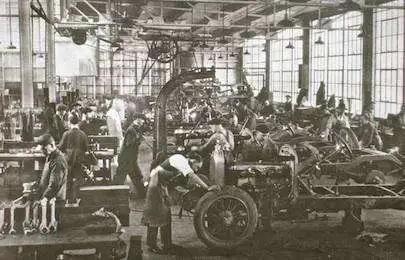
Manufacturing engineering evolved from 18th-century industrial revolutions, transitioning from artisan craft to mechanized mass production. Key milestones include Eli Whitney’s interchangeable parts (1790s), Henry Ford’s assembly line (1913), and the rise of automated, computer-controlled systems in the 1960s-70s. The discipline formally developed from tool and die engineering, heavily influenced by scientific management.